
Why Community Impact Funding Matters
- 5 hours ago
- 5 min read
A child returning to school after months of disruption, a family gaining access to clean water for the first time, a clinic restocking essential medicine after a disaster - these outcomes do not happen by chance. They happen when community impact funding is directed with care, accountability, and a clear understanding of what people need most.
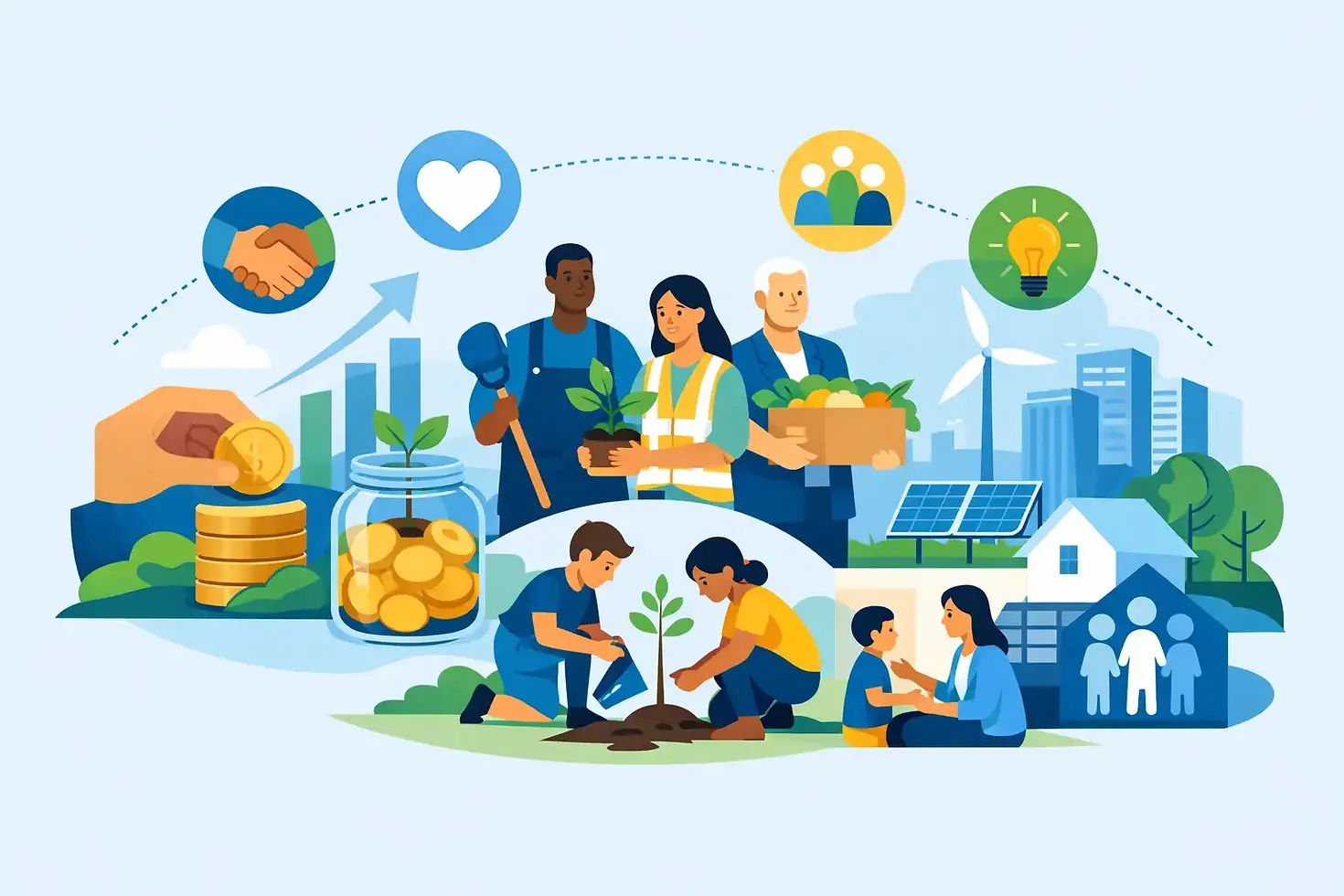
For donors, that phrase can sound broad. In practice, it is much more specific. Community impact funding refers to financial support designed to strengthen real communities through tangible improvements in daily life. That may include education, health services, food security, safe housing, clean water, emergency response, or long-term development. The goal is not simply to give money away. The goal is to help resources reach people in ways that are measurable, responsible, and lasting.
What community impact funding really means
At its best, community impact funding starts with a simple principle - communities themselves should not be an afterthought. Effective funding is not only about the amount raised. It is about whether support reaches people facing urgent challenges and whether that support aligns with local realities.
This matters because need is rarely one-dimensional. A school rebuilding after a flood may also need hygiene supplies, teacher support, and access to clean drinking water. A health initiative may depend on transportation, community trust, and follow-up care. Funding that looks strong on paper can still fall short if it treats complex human needs as isolated problems.
That is why thoughtful donors often look beyond broad promises. They want to know who is receiving support, how decisions are made, and whether results can be seen over time. Community impact funding earns trust when it is connected to real outcomes rather than vague intention.
Why donors are paying closer attention
Many generous people want to help, but they also want confidence. International and community-based giving can feel emotionally compelling while still raising practical questions. Where do the funds go? Who verifies the work? How is impact measured? What happens after the initial donation is made?
These are not signs of skepticism in the negative sense. They are signs of responsible giving. Donors today are often looking for a way to act on compassion without losing sight of stewardship. They want their support to matter in human terms, and they want the process behind that support to be credible.
This is where strong nonprofit platforms and vetted funding models play an essential role. When organizations emphasize transparency, reporting, and accountability, they reduce the uncertainty that can discourage action. They make it easier for donors to support communities with confidence rather than hesitation.
The difference between activity and impact
One of the most important distinctions in philanthropy is the difference between funding activity and funding impact. Activity can be easy to count. It might mean the number of supplies distributed, events held, or participants enrolled. Those figures can be useful, but they do not always tell the whole story.
Impact asks a harder question - what changed for the community because of this support? Did more children stay in school? Did waterborne illness decrease? Did families recover faster after a crisis? Did a project strengthen local capacity instead of creating short-term dependence?
The answer is not always immediate. Some forms of community impact funding produce visible results quickly, especially in emergency settings. Others require patience. A youth education initiative or a maternal health program may show meaningful progress over months or years rather than days. That does not make the investment less valuable. It means the funding strategy should match the nature of the need.
What makes community impact funding effective
Effective funding is usually grounded in a few core practices. First, it responds to clearly identified needs. Communities are not helped when outside assumptions override local knowledge. Strong programs listen before they act.
Second, effective funding is transparent. Donors should be able to understand the purpose of a project, the intended use of funds, and the progress being made. Transparency does not mean every challenge disappears. It means challenges are acknowledged honestly, and progress is communicated with integrity.
Third, effective funding values accountability. That includes financial stewardship, program oversight, and reasonable evidence that resources are producing meaningful outcomes. Accountability is not about bureaucracy for its own sake. It is about honoring both the donor's trust and the community's dignity.
Finally, effective funding respects the long view. Some needs require immediate intervention, especially after natural disasters or public health emergencies. Others call for sustained investment. A community may need relief today and development support tomorrow. The strongest funding approaches recognize both realities.
Community impact funding across global causes
The reason this model matters so much is that community needs vary widely, but the principles of good giving remain consistent. In education, funding can support classrooms, teacher training, school meals, and safe learning environments. In healthcare, it may provide medicine, maternal care, vaccinations, mental health support, or equipment for underserved clinics.
In clean water projects, impact often reaches far beyond infrastructure. Reliable water access can improve health, reduce time spent collecting water, and support school attendance, especially for girls. In disaster relief, funding may help communities secure food, shelter, sanitation, and emergency medical care at moments when time matters most.
Long-term development adds another layer. Here, community impact funding may support livelihoods, agricultural resilience, local leadership, and systems that help communities better withstand future crises. The trade-off is that these outcomes can be less immediate and sometimes harder to communicate in a single headline. Still, they are often what make recovery durable.
Why trust is central to every gift
Trust is not a branding detail in charitable work. It is the foundation that allows generosity to become action. Without trust, donors may delay giving or reduce their involvement. Without trust, communities may also struggle to benefit from stable, sustained support.
That is why credible organizations work to make giving more understandable. They vet projects, communicate impact, and maintain standards that protect both donors and beneficiaries. For many supporters, this is the difference between feeling moved and actually making a contribution.
The Global Giving approach reflects this need for clarity. When donors can see that support is directed toward vetted causes with a commitment to measurable results, giving becomes more than a transaction. It becomes a responsible partnership in change.
How donors can think about their role
For individual donors and families, community impact funding does not require massive wealth to be meaningful. What matters most is intentionality. A well-placed gift can help sustain a classroom, deliver clean water, strengthen a clinic, or support a community recovering from crisis.
It also helps to accept that there is no single perfect giving strategy. Some donors are drawn to urgent relief because the need is immediate and visible. Others prefer long-term development because they want to support deeper structural change. Both instincts can be valid. It depends on your values, your timeline, and the kind of impact you want your giving to help create.
What matters is choosing a trusted path. Look for organizations that communicate clearly, respect community leadership, and treat impact as something to be demonstrated rather than assumed. Generosity is powerful, but informed generosity is what helps communities move forward with strength and dignity.
A more meaningful way to give
Community impact funding matters because it keeps people, not abstractions, at the center of philanthropy. It asks donors to think not only about generosity, but about effectiveness, responsibility, and lasting change. In a world with no shortage of urgent need, that kind of giving can bring both compassion and confidence into the same decision.
When support is guided by trust, transparency, and a real commitment to outcomes, each gift carries more than financial value. It carries the possibility of safer homes, healthier families, stronger schools, and communities with a firmer path forward.



Comments