
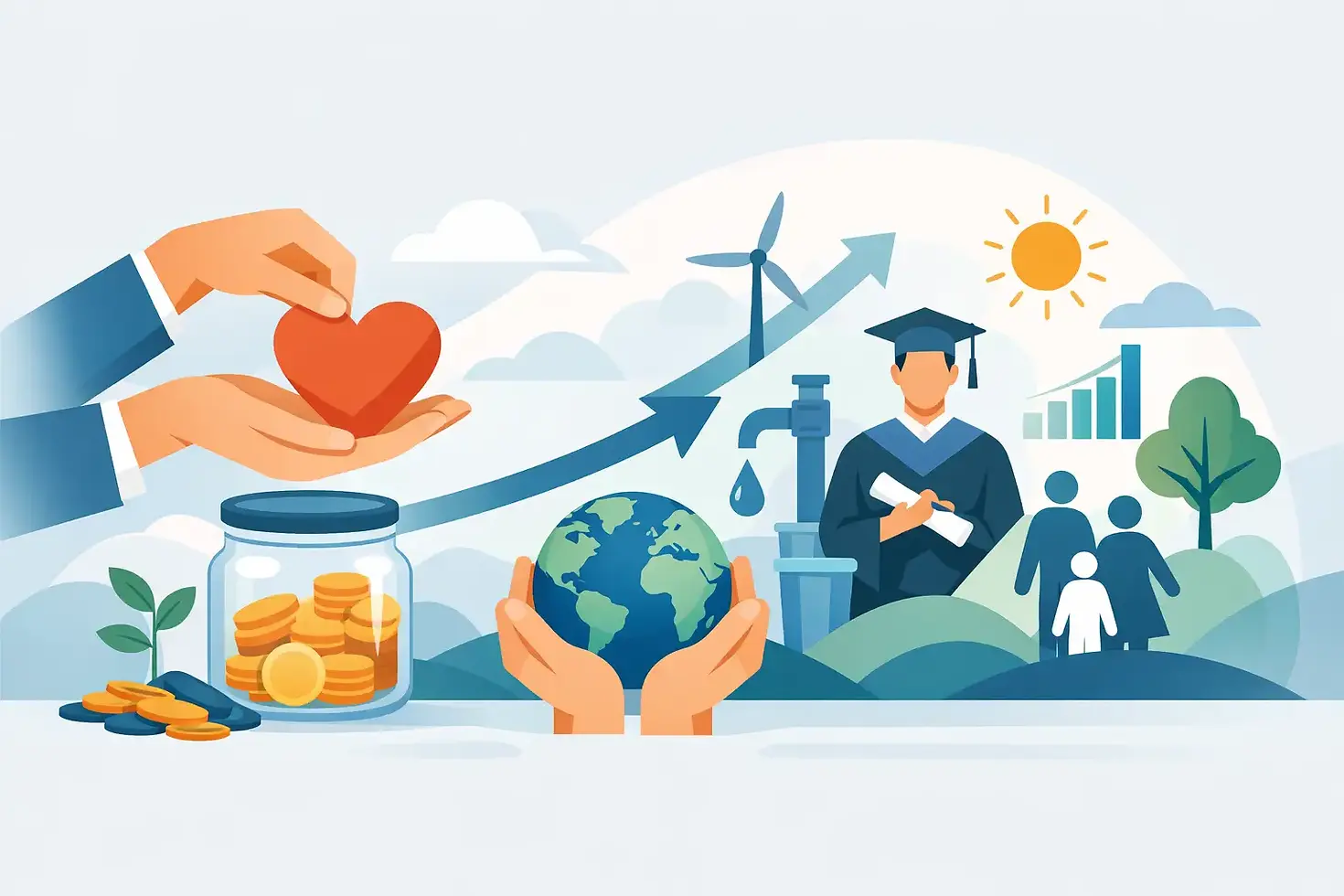
What Is Impact Philanthropy?
- 2 days ago
- 5 min read
A generous gift can fund a school meal, restore clean water access, or help a family recover after disaster. But many donors are asking a more focused question before they give: what is impact philanthropy, and how is it different from traditional charitable giving?
Impact philanthropy is a way of giving that prioritizes measurable results alongside compassion. It is not only about supporting a worthy cause. It is about directing resources where they can create clear, lasting improvement in people’s lives and in the strength of communities. For donors who want their giving to reflect both heart and accountability, this approach offers a more intentional path.
What Is Impact Philanthropy in Practice?
At its core, impact philanthropy means making charitable decisions based on the change a donation can produce. That change might be immediate, such as emergency shelter after a flood, or long term, such as better health outcomes through expanded clinic access. The key idea is that giving should lead to visible progress, not just good intentions.
Traditional philanthropy often begins with generosity, personal connection, or a sense of moral responsibility. Impact philanthropy includes those same motivations, but adds a stronger emphasis on outcomes. Donors want to know what problem is being addressed, how the work is carried out, and what evidence shows it is making a difference.
That does not mean every result can be reduced to a simple number. Humanitarian and development work is more complex than that. A literacy program, for example, may track school attendance and reading gains, but it may also strengthen family stability and future earning potential in ways that unfold over time. Impact philanthropy respects that complexity while still asking serious questions about effectiveness.
How It Differs From Traditional Giving
The difference is not that one form of giving is caring and the other is not. The difference is in how decisions are made and how success is evaluated.
Traditional giving may be driven by loyalty to an institution, a response to an emotional appeal, or a desire to help in a moment of need. Those are valid reasons to give. In fact, they often inspire lifesaving support. Impact philanthropy simply goes further by asking what kind of intervention is most effective, whether funds are reaching the intended community, and how the organization demonstrates responsible stewardship.
This matters especially in global giving, where distance can create uncertainty. Donors may deeply care about education, health care, disaster relief, or clean water, yet still wonder whether their support will translate into real progress. Impact philanthropy helps close that trust gap by focusing on transparency, credible implementation, and evidence of results.
The Core Principles Behind Impact Philanthropy
Most impact-focused giving is built on a few consistent principles. The first is clarity of purpose. Effective philanthropy starts with a defined problem, whether that is unsafe drinking water, maternal health risks, or disrupted schooling.
The second is measurable change. Not every important outcome can be counted precisely, but strong organizations identify meaningful indicators that show whether their work is helping. That could include reduced disease rates, increased graduation rates, faster disaster recovery, or stronger local infrastructure.
The third is accountability. Donors deserve to know how funds are used, what programs are being supported, and how organizations assess progress. Transparency is not a marketing extra. It is part of ethical stewardship.
The fourth is community relevance. Impact is strongest when solutions are shaped by local realities, not imposed from a distance. Philanthropy tends to be more effective when communities help define needs and priorities for themselves.
Finally, there is a long-term view. Some of the most meaningful outcomes take time. A gift may support urgent relief today while also contributing to resilience for tomorrow. Impact philanthropy values both immediate response and sustained change.
Why More Donors Are Choosing This Approach
Many donors are more informed than ever, and with that awareness comes a higher standard. People want their charitable decisions to reflect not only generosity but judgment. They want confidence that their support is reaching credible programs and contributing to meaningful outcomes.
That shift is not about skepticism for its own sake. It is about responsibility. If a donor cares deeply about helping children stay in school or helping families access safe water, it makes sense to ask which organizations are equipped to do that work well.
This is also why trust and transparency matter so much. When nonprofits communicate clearly about goals, methods, and results, donors can give with greater peace of mind. The relationship becomes more than a transaction. It becomes a shared commitment to change.
What Impact Looks Like Across Global Causes
Impact philanthropy is not limited to one sector. It applies across many of the issues donors care about most.
In education, impact may mean improved attendance, stronger reading levels, or safer learning environments for children who would otherwise be left behind. In health care, it may involve expanded access to treatment, maternal care, vaccinations, or community health training. In clean water initiatives, impact can be seen in lower rates of waterborne illness, reduced time spent collecting water, and stronger local sanitation systems.
In disaster relief, the picture is more immediate but still measurable. Effective giving can help provide shelter, medical aid, food, and recovery support in ways that protect dignity and speed stabilization. In sustainable development, impact often builds gradually through livelihoods, infrastructure, and local capacity that continue long after the original gift is made.
Each area requires different methods and expectations. That is one of the trade-offs donors should understand. Some interventions produce quick, visible outcomes. Others take longer and depend on many factors outside a nonprofit’s control. Impact philanthropy does not promise certainty. It encourages thoughtful giving grounded in the best available evidence.
How Donors Can Evaluate Impact Thoughtfully
For individual donors, impact philanthropy does not require becoming a technical analyst. It does require asking a few practical questions.
What specific problem is the organization trying to solve? How does it approach that work? What signs of progress does it share? Does it communicate openly about both successes and challenges? Is there evidence that the programs are responsive to local needs rather than designed only for donor appeal?
It also helps to look at whether the organization treats transparency as a core responsibility. Clear reporting, responsible financial stewardship, and credible program descriptions are strong signs that a nonprofit takes impact seriously.
At the same time, donors should avoid oversimplifying what effective giving looks like. The lowest overhead ratio alone does not prove the strongest impact. Neither does a dramatic story without context. Good philanthropy often balances human stories with verifiable outcomes, and urgency with long-term planning.
What Impact Philanthropy Does Not Mean
It is helpful to clear up a common misunderstanding. Impact philanthropy does not mean only funding what can be neatly quantified. Some of the most important work in community well-being involves trust, dignity, social cohesion, and local leadership. These may be harder to measure, but they still matter.
It also does not mean philanthropy should operate like a business investment seeking financial return. The return in this context is social good: healthier families, safer communities, stronger opportunity, and reduced suffering.
Most importantly, impact philanthropy does not remove compassion from giving. It strengthens compassion by pairing it with discipline. The goal is not to make generosity colder. The goal is to make it count more.
A More Confident Way to Give
For many families and individuals, the real value of impact philanthropy is confidence. Giving becomes more than an act of goodwill. It becomes a deliberate contribution to outcomes that can be seen, understood, and trusted.
That is especially meaningful in international giving, where donors want assurance that distance will not weaken accountability. Organizations such as The Global Giving help meet that need by connecting supporters with vetted causes and a clearer line of sight between contribution and community benefit.
Impact philanthropy asks donors to bring both empathy and discernment to the same decision. When those two qualities work together, generosity becomes more focused, more responsible, and more capable of creating lasting change.
The most meaningful gift is rarely the one that feels good for a moment. It is the one that helps a community move forward with dignity, stability, and real opportunity.



Comments